
Yoga, qigong, and gentle movement offer practical ways to notice how your body feels throughout the day. We publish free educational articles you can read at your own pace — no purchase required.
Educational content only. Wristsaeankleel.ddd is an information website based in Rochester, NY. We are not a clinic, pharmacy, fitness certification body, or licensed healthcare provider.
Try the Energy Reflection ToolMost of us do not need another intense workout — we need smarter ways to move, breathe, and rest.
Energy is not a fixed tank you either have or lack. It shifts with posture, breath, stress, sleep, and how long you stay in one position. Traditional movement systems — yoga from India, qigong and tai chi from China — describe this vitality in different languages, but they share a practical insight: when energy stagnates, you feel dull or wired; when it flows freely, you feel more present and capable.
Modern desk life compresses that flow. Hours in a chair narrow the hips, round the shoulders, and shallow the breath. Long stillness can leave you feeling stiff or mentally flat by mid-afternoon. The practices on this site are not about chasing peak performance. They are about small, repeatable resets — a five-minute inversion, a two-minute shake, a single balancing pose — that help you notice when you are spending energy faster than you restore it.
Published research on mind-body practices has explored general comfort, sleep rhythm, and self-reported vitality in various populations, though individual results vary widely. What matters is finding movements that fit your day, not copying someone else's routine. This is educational information only, not medical advice.
Longer exhales are a common breath pacing technique many people find calming.
Micro-breaks prevent energy from pooling in one area.
Passive shapes let your body recover without effort.
Timing practices to your natural peaks and dips.
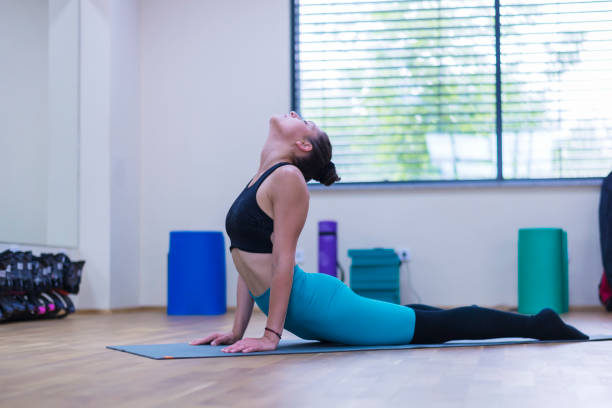
In yoga, energy is called prana. It moves through channels known as nadis. When you sit in one position for hours, those channels can feel compressed — like a garden hose with a kink. Asanas, or physical postures, are one way yogis unblock that flow.
Backbends such as Cobra (Bhujangasana) and Bridge (Setu Bandhasana) open the chest and lengthen the front body. Many practitioners report feeling more alert after a gentle backbend, possibly because the posture expands rib movement and encourages deeper breathing. Published yoga research often discusses general effects on self-reported energy and comfort; individual experiences vary and this content is not medical advice.
Semi-inverted positions — even Legs-Up-the-Wall for a few minutes — change how blood flows in the lower body. Some people describe clearer thinking afterward. A 2018 review in Frontiers in Psychology noted that yoga interventions were associated with improved self-reported energy in several studies, though results differ by person and practice frequency.
Explore Yoga & PranaChinese movement arts focus on qi — vital energy that circulates through meridians. Unlike high-intensity exercise that spends energy quickly, qigong teaches you to gather and circulate qi with minimal expenditure. The movements are slow, circular, and continuous, designed to prevent the blockages that come from abrupt starts and stops.
One accessible technique is whole-body shaking: stand with soft knees, let your arms and torso bounce naturally for two to three minutes, then stand still and notice how you feel. Some qigong teachers describe this as a way to release physical tension after sitting. Published reviews have explored qigong and self-reported stress comfort; this is educational information only, not medical advice.
Tai chi extends the same principles into choreographed sequences. Both practices embody wu wei — effortless action — doing less to achieve more stable energy throughout the day rather than crashing after a burst of effort.
Learn Qigong & FlowA simple self-reflection exercise — not a medical assessment — to match how you feel with a general movement idea.
Choose the description that fits best right now:
This tool offers general lifestyle ideas only. It does not assess, diagnose, or treat any condition. For personal health questions, contact a licensed professional in your area.
Full inversions like Headstand require training, but partial inversions are available to many people. Legs-Up-the-Wall (Viparita Karani) is widely used: lie on your back, hips near the wall, legs extended upward. Stay for a few minutes while breathing naturally.
Gravity assists blood flow from the legs, which some people find comfortable after long sitting. Individual responses vary. Downward-Facing Dog held briefly offers a mild inversion with shoulder and hamstring lengthening.
Talk with a qualified healthcare or fitness professional before trying inversions if you have concerns about balance, pregnancy, or existing health conditions.
How to use movement practices responsibly in everyday life.
All content describes lifestyle and movement awareness. It does not replace guidance from licensed healthcare providers for specific conditions, injuries, or symptoms.
Never force a stretch or hold a pose through sharp pain. Modify shapes to fit your body — use blocks, walls, and chairs as supports.
Dizziness, chest discomfort, or unusual breathlessness during practice are signals to stop and seek appropriate professional evaluation.
Five minutes daily often matters more than one long session per week. Build habits gradually rather than pushing through exhaustion.
Community-style workshops and open sessions in the Rochester area.
A gentle 45-minute session exploring chest-opening asanas and breath coordination. Suitable for beginners. Bring a mat and water bottle.
Register InterestLearn the standing shake technique and two simple meridian-warming sequences. Focus on release rather than performance.
Register InterestPractical micro-practices for office workers: seated twists, breath pacing, and wu wei breaks you can use between meetings.
Learn MoreNo. All articles, tools, and event listings describe general lifestyle and movement ideas for educational purposes. We do not provide medical advice, diagnosis, treatment, telehealth, or emergency services. Always consult a licensed healthcare provider for questions about your health.
No. Wristsaeankleel.ddd is a free information website. We do not process payments here, do not sell supplements or equipment, and do not offer paid medical or therapeutic services through these pages. Event listings are for community-style workshops; contact us for general details only.
No formal background is required. The techniques described here — legs up the wall, gentle shaking, basic standing poses — are accessible to most adults. Start with short sessions and use props like walls and chairs for support. If you have mobility limitations or chronic conditions, discuss appropriate modifications with a qualified movement instructor or healthcare provider.
Some people notice a shift after a single short session. Broader changes in daily rhythm often take weeks of consistent practice. We do not promise specific outcomes; your experience depends on sleep, nutrition, stress, and many other factors unique to you.
Yes. Many people use qigong shaking or tai chi walking in the morning for gentle activation, then restorative yoga in the evening for down-regulation. The key is matching the practice to your current state — stimulating when depleted from stillness, calming when wired from stress.
Minimal. A yoga mat, a clear wall, and comfortable clothing are enough for most practices on this site. A folded blanket supports restorative poses; a sturdy chair helps with balance work and seated modifications.
Who we are and what this website offers.
Wristsaeankleel.ddd is an educational website operated from Rochester, New York. We publish free articles about yoga, qigong, restorative movement, and workday energy habits for adults who want practical lifestyle ideas — not medical treatment or paid coaching through this site.
What we provide: free written guides, a general energy reflection tool, community event information, and a contact form for questions about our content.
What we do not provide: medical advice, mental health treatment, telehealth, prescription services, fitness certifications, or emergency support. We do not claim that reading our content will produce specific health outcomes.
Advertising transparency: If you reached this site through an online advertisement, the ad promotes our free educational content only. We do not sell products through ads, do not collect payment on this website, and do not offer licensed healthcare services. Examples on this site are illustrative; individual results vary, consistent with FTC guidance on truthful advertising.
For medical care, contact a licensed professional or call 911 in an emergency. For questions about this website, use our Contact page.